
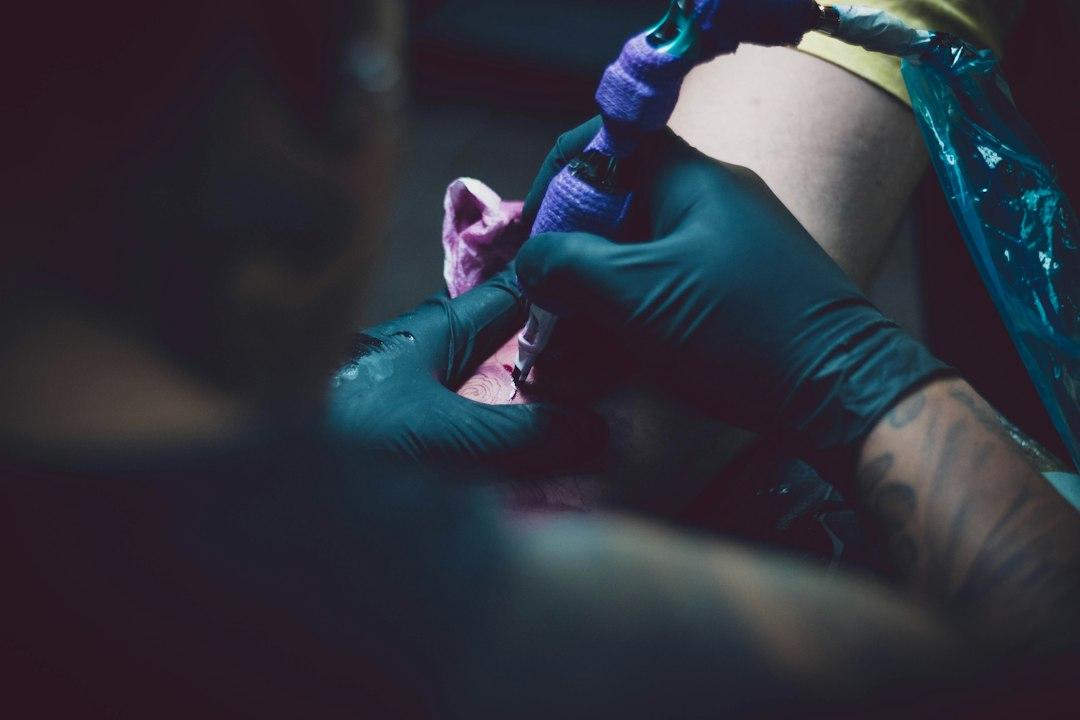
An online tattoo course in the UK teaches you the theory behind tattooing: hygiene, machine setup, design and skin anatomy. It does not make you job-ready on its own. To tattoo paying clients safely, you still need supervised practice on real skin, usually arranged through your course provider or a local studio.
Think of the online part as your classroom and the in-person part as your workshop. You need both to get anywhere near a professional standard.
What an online tattoo course actually covers
Most online tattoo courses in the UK follow a similar pattern. You work through video lessons in order, often with short quizzes or assignments along the way. A typical curriculum covers:
- skin anatomy, including the different skin layers you'll be working into
- hygiene and bloodborne pathogen control (the viruses and bacteria you must guard against)
- colour theory, so your line and shading choices actually hold on skin
- machine and needle setup, plus maintenance between sessions
- aftercare advice you'll give every client
- consultation skills and basic business practice, like pricing, record keeping and knowing when to suggest a patch test for a client with a history of skin reactions
Use this list when you compare providers. If a course skips client consultation or business basics, ask why.
Course length varies a lot between providers. Some beginner courses run for a single day. Others stretch to around ten days of structured learning. Neither length guarantees you'll be ready to work on clients once it finishes. That depends on how much supervised practice follows.
It's also worth knowing there's no single nationally recognised or accredited tattoo qualification in the UK, so finishing a course doesn't automatically confer any official status. Some providers seek independent accreditation (for example, from BAQA) or build in CPD, short for continuing professional development, after you qualify. Ask your provider plainly what accreditation, if any, their course carries and what that actually covers.
The UK rules you must know before you start
Tattooing has legal rules in the UK that course adverts rarely spell out. First, a person must be at least 18 to get a tattoo. It is an offence to tattoo someone younger, even with a parent's permission. This comes from the Tattooing of Minors Act 1969.
Second, any premises where tattooing happens, whether a studio, a home setup or a mobile service, usually needs registering with your local council before you tattoo anyone. This requirement comes from the Local Government (Miscellaneous Provisions) Act 1982, which covers skin piercing businesses including tattooing. Registration rules, fees and exact requirements differ from one council to the next, and across England, Wales, Scotland and Northern Ireland, so check with your local authority directly before you take on a single client.
No online course can register your premises for you. That step happens separately, once you know where you'll actually be working.
Budgeting for equipment and insurance
The course fee is rarely the full cost of learning to tattoo. Budget separately for a machine or starter kit, needles and cartridges (always single-use, never reused between clients or practice sessions, and you'll go through them quickly while practising), a core range of inks, practice skins so you're not moving straight to real skin, a steriliser (autoclave) along with the spore-test strips you'll need to prove it's working and keep records of, and aftercare products to recommend or sell to clients. Ask your provider exactly what's included in the price before you pay. Some bundle a starter kit in. Others expect you to buy everything separately, and the total adds up fast.
Insurance is the other cost people forget. Before you tattoo anyone for money, you generally need public liability insurance, which covers claims if a client is injured or has a bad reaction, and professional indemnity insurance, which covers claims about the quality of your work or advice.
Having a course certificate doesn't automatically mean an insurer will cover you. Insurers set their own rules about which courses and which amount of supervised practice they'll accept. Before you enrol anywhere, ask the provider a direct question: has an insurer actually confirmed they'll accept this certificate? Get the answer in writing if you can. That's a far better quality check than a certificate with a nice logo on it.
Turning online learning into real skill
An online course can teach you the theory, but it still has to check your hands-on skill some other way. Most providers do this through video submission. You record yourself tattooing on practice skin, then send the clip to a tutor who reviews your needle depth, machine angle and line control, and sends back feedback.
That works well early on, but it has limits. You can't fully judge pressure, skin texture or a nervous client through a screen. That's why solid programmes pair the online theory with in-person sessions, sometimes starting within the first few days of a blended course, where you tattoo real models under a tutor's direct supervision, with proper consent and health-history forms completed before each session, just as you would with a paying client. Even strong teaching on sanitation, fine line technique and skin anatomy still needs that supervised, in-person stage. Skipping it is the main reason online-only graduates struggle to reach a safe, employable standard.
Once you finish the theory and practice modules, build a portfolio before anyone trusts you with their skin. Photograph every practice piece, including the rough ones from early on, and note what you'd do differently next time. Studios and apprenticeship supervisors will ask to see this record.
One UK student reached a standard suitable for small client work about nine months after finishing an online course, through daily practice in between. That's a realistic timeline to expect, not a guarantee. How often you practise matters more than which course you buy. From there, most people look for apprenticeship time or guest spots in a studio to keep building client experience under supervision. Treat your online course as the start of that path, not the end of it.
If you want to compare structured courses and see what fits your schedule and budget, browse our course categories page, or check our FAQs for common questions before you sign up. Still unsure which path suits you? Get in touch and we'll point you in the right direction.